Moqueca baiana – Clean fish “curry” – Coconut fish stew

This is not an Italian recipe, clearly. It is a Brazilian fish stew, or as I like to call it, “curry”. I make no claim of authenticity: I have never had authentic moqueca de piexe/baiana. I only claim that it is easy, and delicious. That is enough for me.

Use a firm white fish, possibly in chunks. Season it in advance if you can, place it on top of the vegetables, add coconut milk towards the end, cover, and let it cook gently. No violent boiling, no aggressive stirring, no heroic interventions.

Also, if the fish has bones, or if you add prawns with their shells, even better. They will release flavour into the stew while cooking. Fish stock made on the spot, basically. Very civilised.

Ingredients

For 3–4 people:

  • ghee or flavourless oil
  • a few garlic cloves
  • parsley stems
  • 1 or 2 canned anchovies
  • 1 teaspoon tomato concentrate
  • firm white fish, in large pieces
  • prawns or other seafood, optional
  • paprika, sweet or hot
  • lemon
  • black pepper
  • salt
  • 1 or 2 onions
  • 1 or 2 tomatoes
  • 1 or 2 capsicums, ideally mixed colours
  • coconut milk
  • fresh chilli, optional
  • baby potatoes, optional
  • white rice, to serve

A note on turmeric: Brazilians sometimes add a teaspoon of turmeric powder to the coconut milk. I usually avoid it. Not because it is wrong, but because I prefer the cleaner flavour of coconut, fish, tomato and capsicum. Do as you please.

Recipe

  1. Season the fish, and any seafood you are using, with paprika, lemon juice, black pepper and a little salt. Use hot paprika if you want the dish to have a bit of violence. Let it rest for 20 minutes if possible, while you prepare everything else.
  2. Slice the onions, tomatoes and capsicums across. Not too thin, not too thick. Say, 3 mm thick. They will need to pan-fry at first and then become the bed on which the fish cooks.
  3. In a wide pan or pot, heat ghee or a flavourless oil. Add the garlic, parsley stems and anchovies. This is your soffritto. Cook gently. The anchovies should melt into the fat. Do not burn the garlic, obviously.
  4. Add one teaspoon of tomato concentrate and mix it in with the oil/fat.
  5. Add the sliced onions, tomatoes and capsicums. If using baby potatoes, add them now too. Let the vegetables cook for a few minutes, until they begin to soften. Add fresh chilli at this point if using it.
  6. Place the fish chunks on top of the vegetables. If using prawns, other seafood, or delicate fish fillets, add them after step (7), 5 minutes before serving. Otherwise they’ll overcook and harden.
  7. Add the coconut milk. Look for a brand that has no additives like thickeners. Ingredients such be just coconut and a bit of water, low percentage.
  8. Cover with a lid and cook gently. Low flame. No aggressive boiling. The fish should steam and poach on top of the vegetables. Depending on the size of the pieces, this should take around 15–20 minutes.
  9. Do not stir too much. The fish is not meant to “disfarsi”, break up, as Italians would say. You want pieces of fish, not fish porridge.
  10. Taste only at the end and adjust the salt when the stew is basically ready. The anchovies, fish, seafood and coconut milk will all affect the final balance, so salting too confidently at the beginning is a trap.

Serve with plain white rice. The rice is essential because it absorbs the sauce, which is arguably the whole point of the dish. It feels like the cleanest curry, to me.

Enjoy with a cold white wine, or beer, and friends and family.
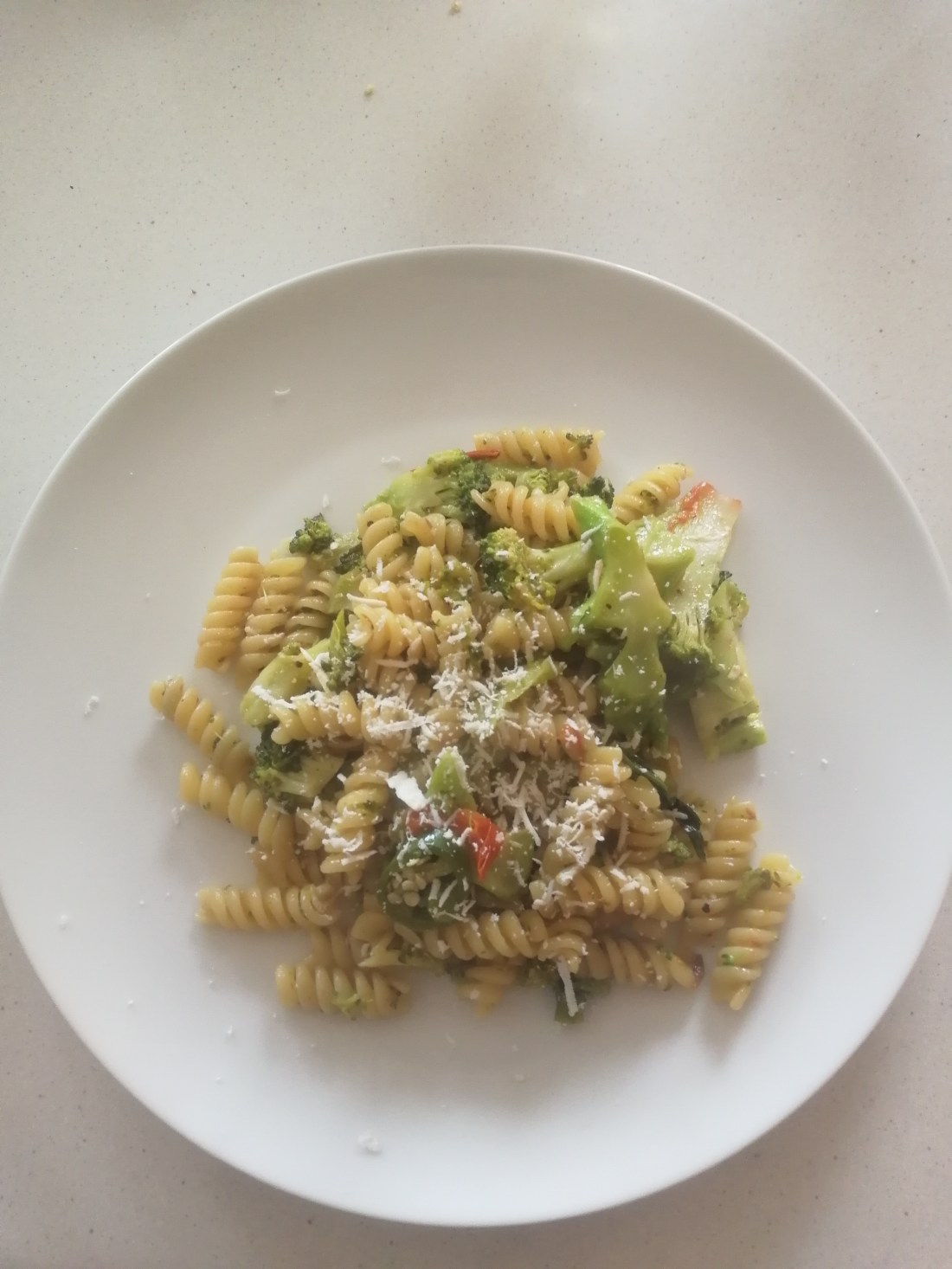
Pasta with Anchovies, Ricotta Salata and Broccoli

Hey three readers, I’m back to publish this recipe, which has become a staple in my life. Very easy, no big requirements, guaranteed success. A friend has asked me to put it down, so here is what you’ll need:

  • 400 g of pasta. I like to use fusilli (e.g. La Molisana) but orecchiette are more traditional, given this recipe come from Puglia;
  • A piece of ricotta salata (I get it from Harris Farm or Crown Street Grocer, Sydney);
  • 90g of anchovy fillets in olive oil (you MUST use the brand Delicius, see here. Again, Crown Street Grocer);
  • a broccoli head;
  • a little parsley branch;
  • a chilli;
  • a clove of garlic;
  • extra virgin olive oil;
  • salt and pepper;

A note on ricotta salata. Ricotta salata is the aged salty version of ricotta. I strongly recommend you to use it, but if you really can’t find it or want to try out the recipe with what you have in the house, you can use pecorino or even parmesan (not recommended).

Put a pan on low-medium heat and light fry some chilli (at your discretion), a parsley branch and a clove of peeled garlic in a generous amount of evo oil. Add half of the anchovies too, making them dissolve into the oil.

When the garlic has browned (after about 5 minutes), remove it and the parsley branch, otherwise they’ll end up burning.

Now add all the chopped broccoli to the pan. The finer you chop them, the more the sauce will be “creamy” rather than chunky. The broccoli will absorb most of the flavoursome oil. That’s okay. I usually just top up after with an extra bit of oil though.

That’s it. Let the Fettuccelle boil in salty water separately for 10 minutes and then add them to the pan with a ladle of pasta water. Mix the pasta vigorously as it finishes cooking with the sauce on a high flame.

Only when the pasta is cooked (al dente!) You can turn the heat off and start grating the ricotta salata on top, while also mixing. This is what we called the “mantecatura” phase. Remember: heat off. You’re not looking for a pasta with strings of cheese. The cheese should remain kind of raw and blend in with the sauce.

Extra tips. (1) If the pasta gets too dry while on the pan, adjust the creaminess by adding pasta water to it. (2) If you want to take the edge off the anchovies, add half a glass of dry white wine to the oil-anchovies mix. Then let the alcohol evaporate. Then add the broccoli. (3) Some lemon peel in the soffritto is a nice addition.

Perfectly Essential Fried Battered Flathead (or Cod)… Italian-style

Hi mum/sister/distant relative. This is one of my favourite dishes to cook and savour. It is essential, quick to make, tasty and will test your agility in the kitchen.

Ingredients.

  • a flathead;
  • some basic white flour;
  • extra virgin olive oil;
  • salt & pepper (to be added after plating);
  • some salad to serve as a side, dressed with evo oil & lemon.

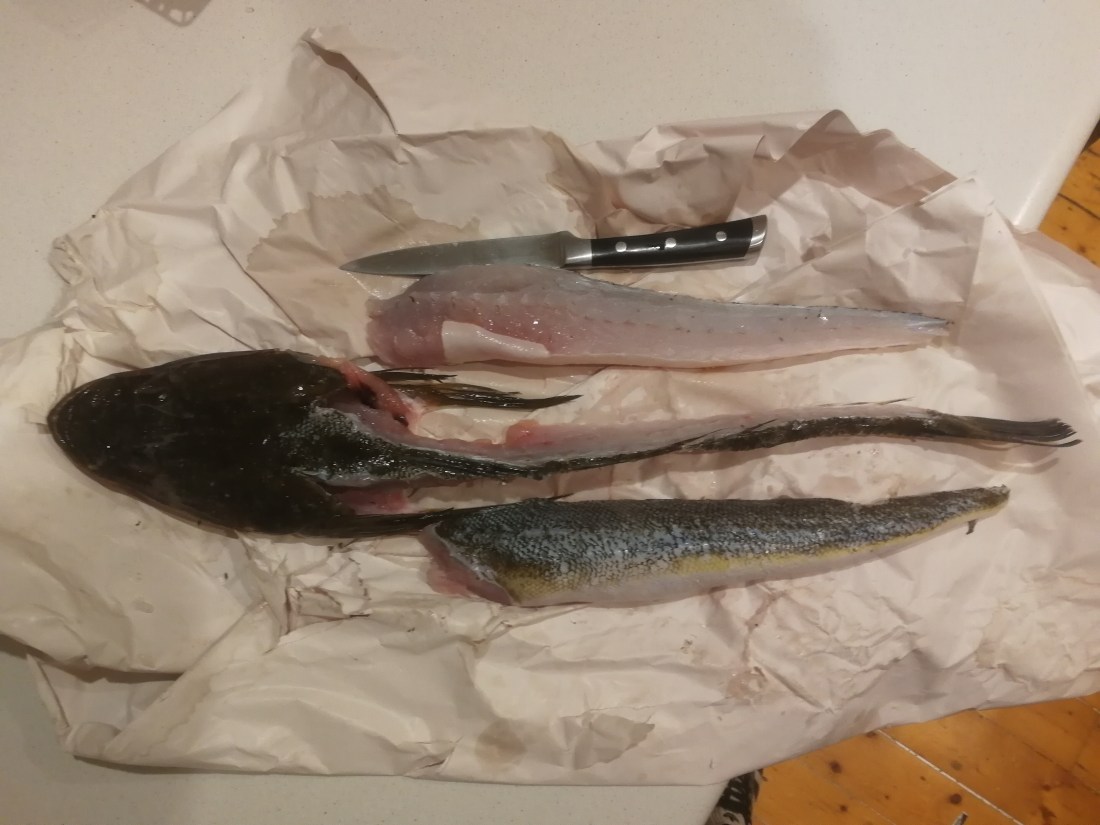
Preparation. Fillet the flathead as shown in this video. I enjoy filleting my own fish, you should try it too. I usually buy my flathead de-gutted and without scales. Leave the skin on. Put some flour on a plate and fill a bowl with cold water. Now dip one fillet in the cold water and let the excess water drip back into the bowl. Then, place the fillet on the plate and cover it with flour. Now dip it again and flour it again. You should have managed to create a somehow fragile but reasonably thick batter. Repeat the procedure for the other fillet.

The oil. Pour some evo oil into a pan, so that it is 0.5-1cm deep. Turn the heat on and check when it is hot enough by throwing little balls of flour and water in every now and again. If the fry, the oil is ready. throughout the frying, you need to ensure that the oil is not burning (lots of smoke and bad smell). You can lower the temperature by adding some extra oil and lowering the flame.

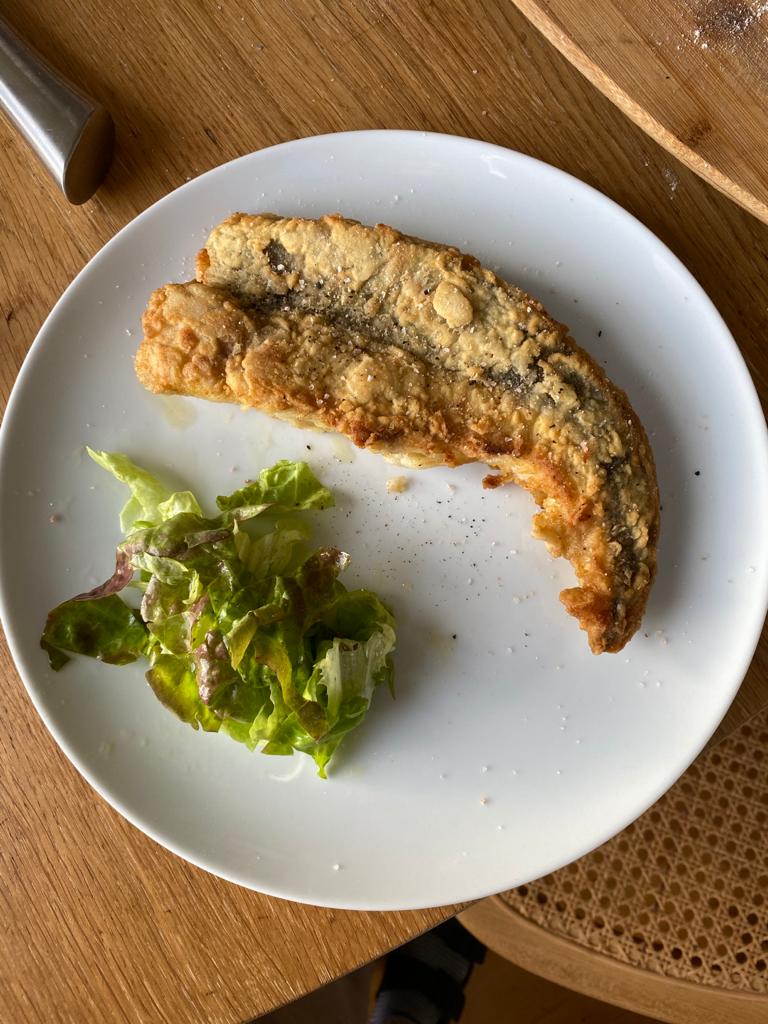
Fry! Now gently place your fillet(/s) into the pan. Let it fry on one side until it is crunchy (on that side). Then turn it. Be mindful to turn it only once, and be gentle. Let it fry it to crunchiness on that side too. You should also regularly scoop some hot oil on the short sides of the fillet, which will tend to remain undercooked. The whole frying process should take you 15 minutes maximum. The lovely golden colour of the battered fillet will suggest you when to take it off the flame and serve it. Only now add salt and pepper. Salting before or while frying will make your fish soft, not crispy.

Enjoy!

How to make Bottarga from fish roe

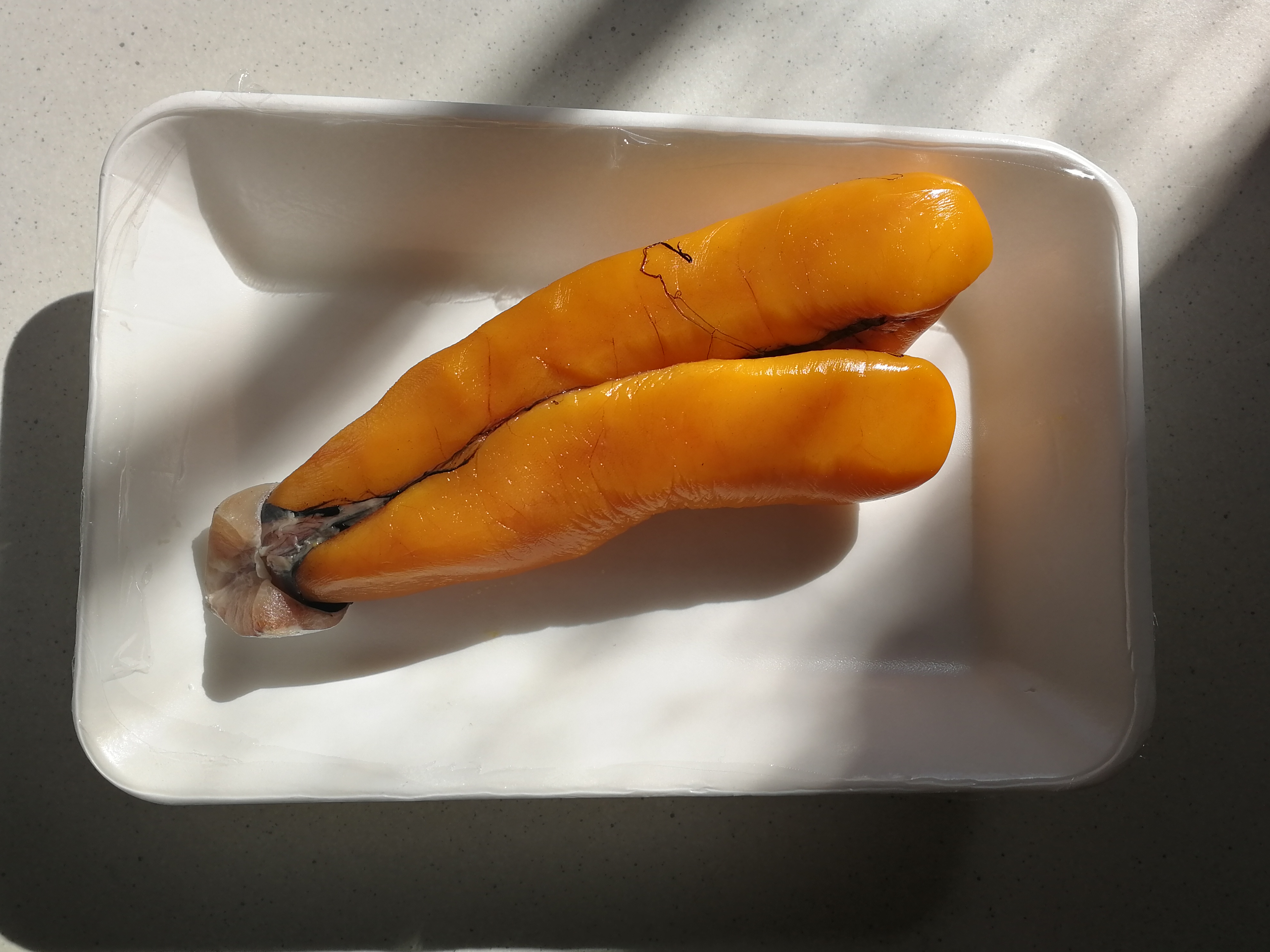
Yesterday, at Sydney’s Fish Market, the fish roe caught my attention. I bought it at 35 AUD/kilo (approx. 10 AUD each) thinking something tasty would have come from it. Once at home, I decided to research how bottarga is made. Chef Stefano Barbato explains the surprisingly simple recipe on YouTube (in Italian).

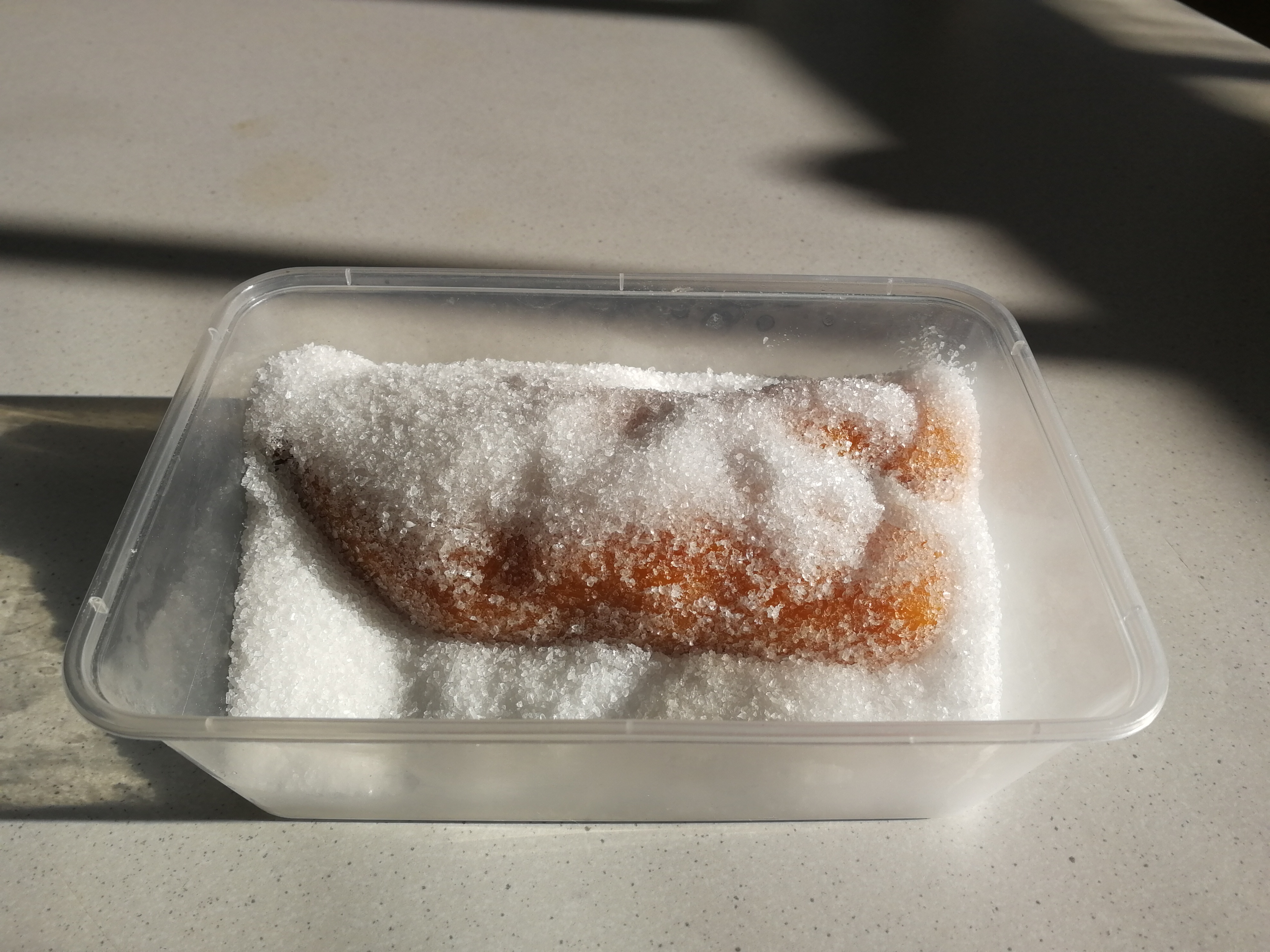
  1. Cover the fish roe in salt in a box;
  2. Leave it in the fridge for at least 2 days;
  3. It’s ready: you can make beautiful and easy spaghetti with bottarga!

I will soon show you my results and make a post about spaghetti with bottarga, something to die for.