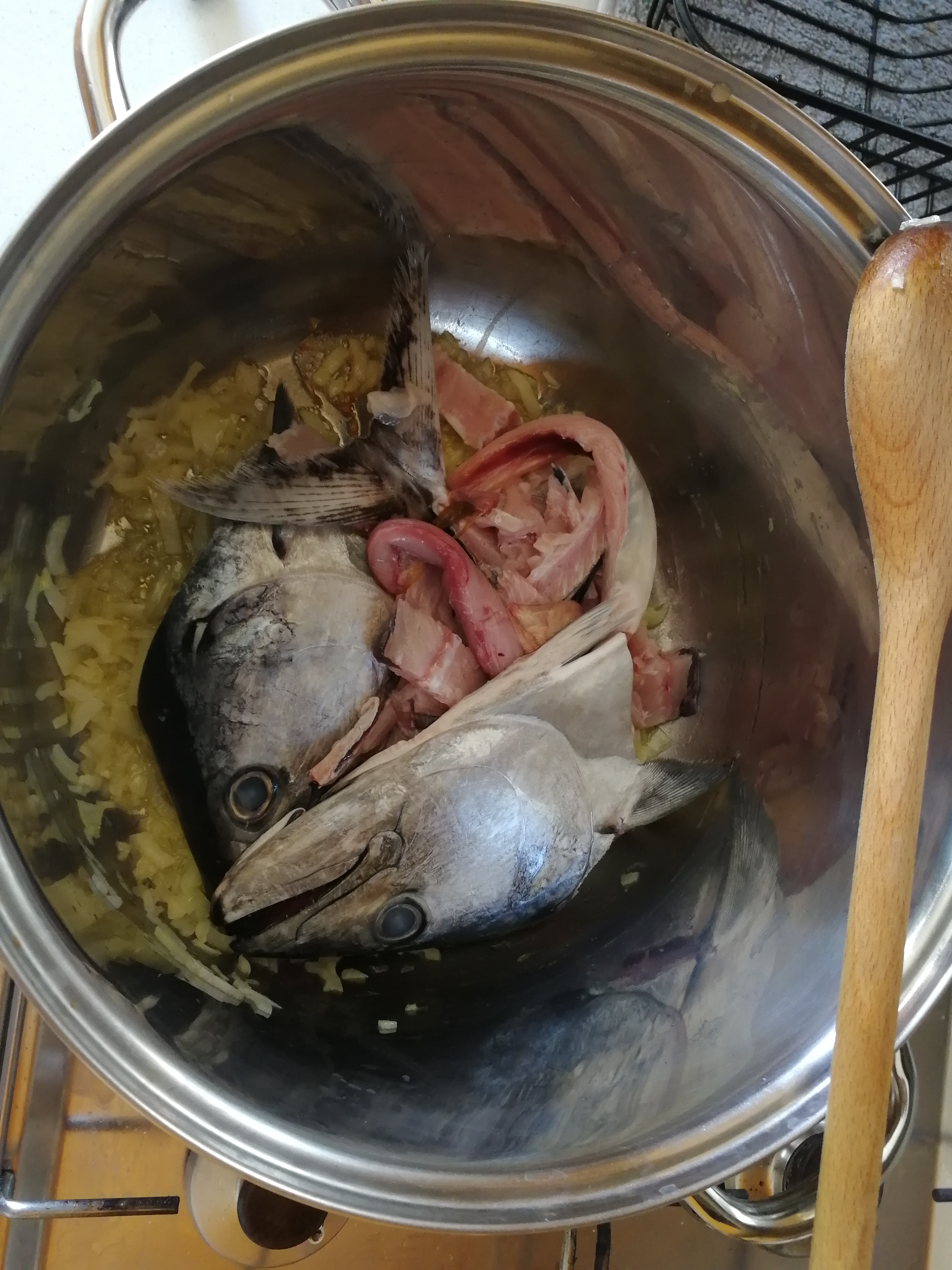
Making a stock instead of buying an industrial one is easy, cost-efficient and it gives a sensible edge to your dishes. In his Oltre il Fornello (Beyond the stove), Gualtiero Marchesi describes how to make it.
- Wash the fish head (removed of its gills) and bones thoroughly, thus removing most of the blood;
- Grease up a pot with butter and put some finely chopped veggies in it (e.g. leeks or onions) to sweat, as in to release their liquids without getting brown. Make sure that the flame must be low enough to allow this.
- After that (no need to wait), add the head and bones too (chop them if possible), so they can sweat and dry up as well;
- Once their liquids from from fish and veggies have evaporates, add half a cup of white wine (or more if you feel it is not enough);
- After the white wine has evaporated, cover with water and add herbs. These are usually a bouquet garni, aka parsley’s stems, a little thyme branch and a piece of bay leaf.
- Let it boil for half an hour and frequently remove them foam emerging on the surface (or foam it);
- Before filtering it, push vigorously on the carcass and on the veggies so as release all their juices.
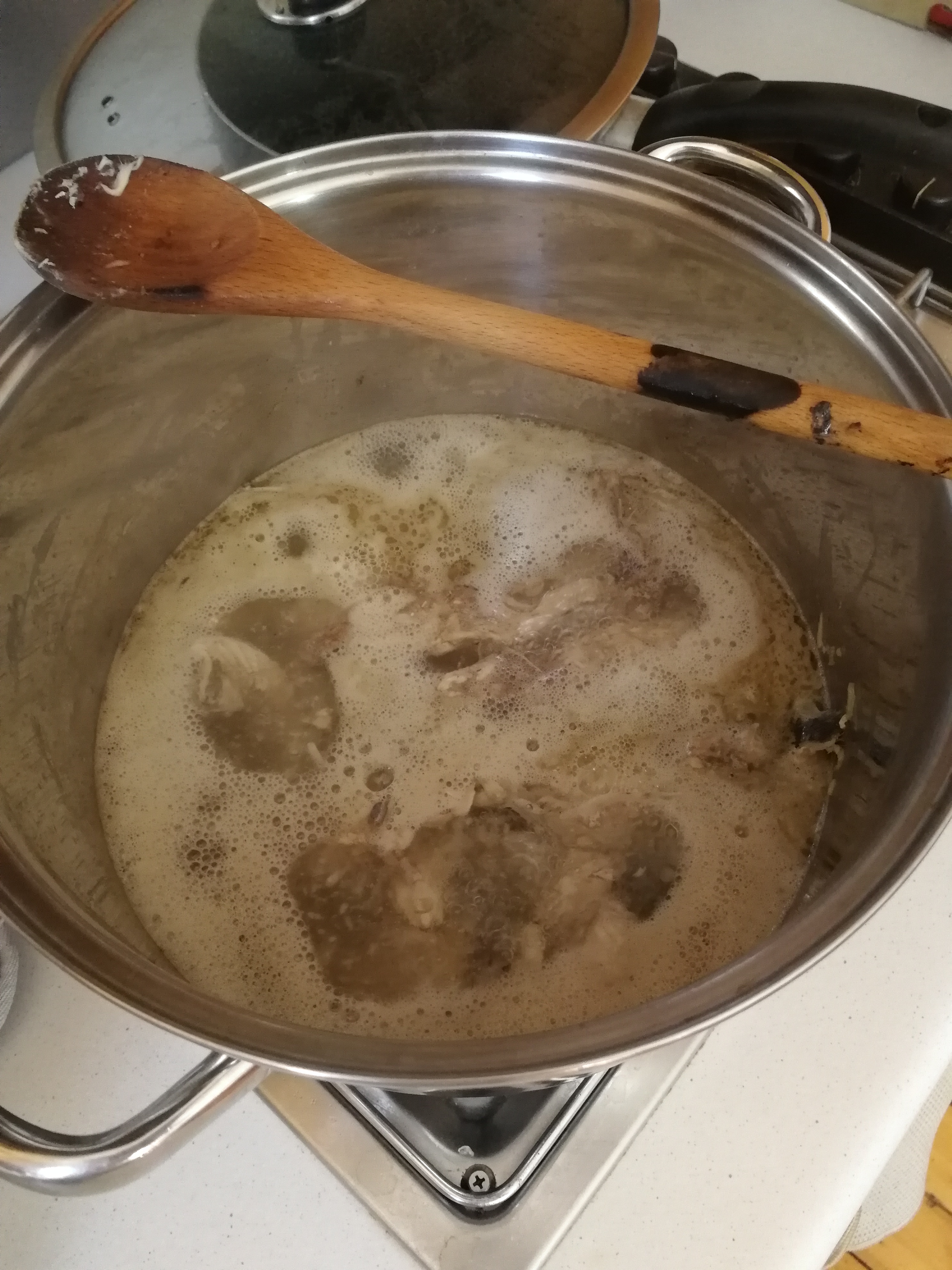
A final note: different classes of fish are best suited for different types of fish stock. The tastiest ones (e.g. red mullet, scorpion fish) are well-suited for soup-oriented fish stock. Flatheads are one of the midrange options, making a great all-round stock. Avoid the most delicate specimens such as sea breams, sea bass and freshwater fishes; they don’t provide much flavour.
Your fish stock is now ready to give flavour to soups, sauces and even baked fish! Do not salt it, as you will put salt in the final dish that your stock is being used for. Do not exceed in the use of veggies and herbs: they are not the protagonists. Freeze the stock if you want to it to last for longer.
 Italo's Kitchen