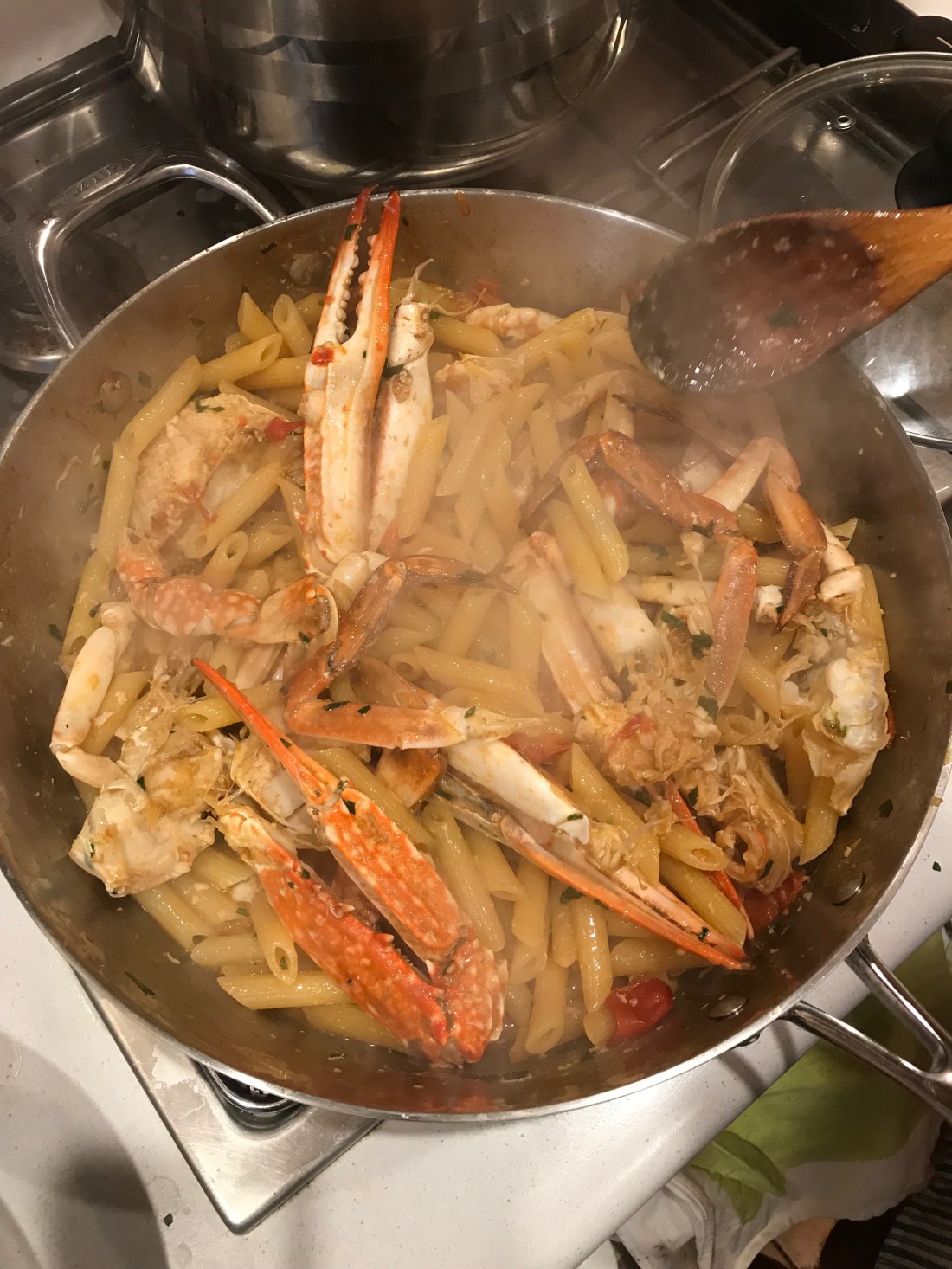
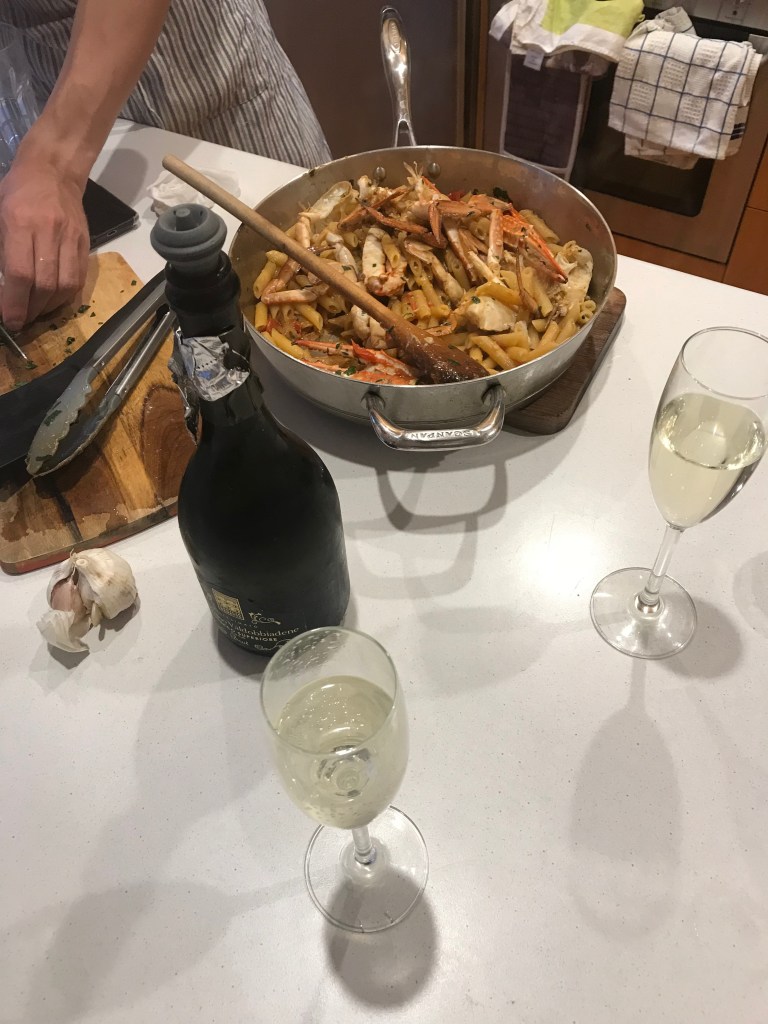
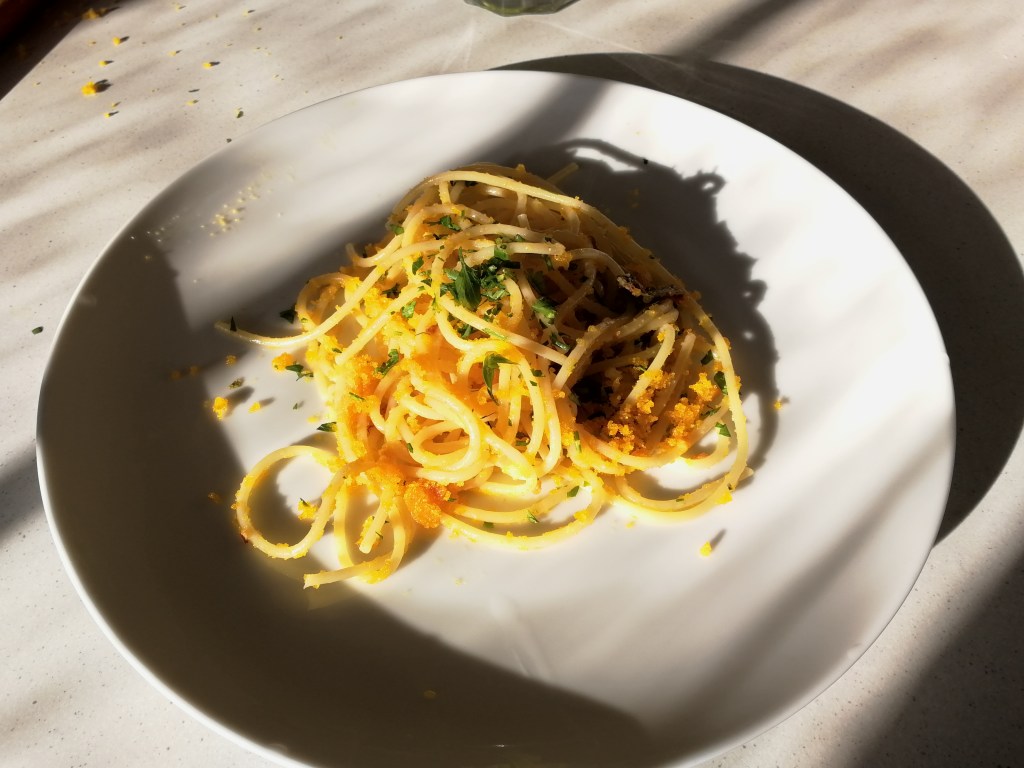
When a year ago I started getting into Italian seafood cousine, I immediately got obsessed with one of the world’s highest delicacies: crustacean pasta. Here in Australia I tried both the Blue Swimmer Crab and the Mud Crab, which is much bigger and more impressive, and for pasta sauce purposes I preferred the former.
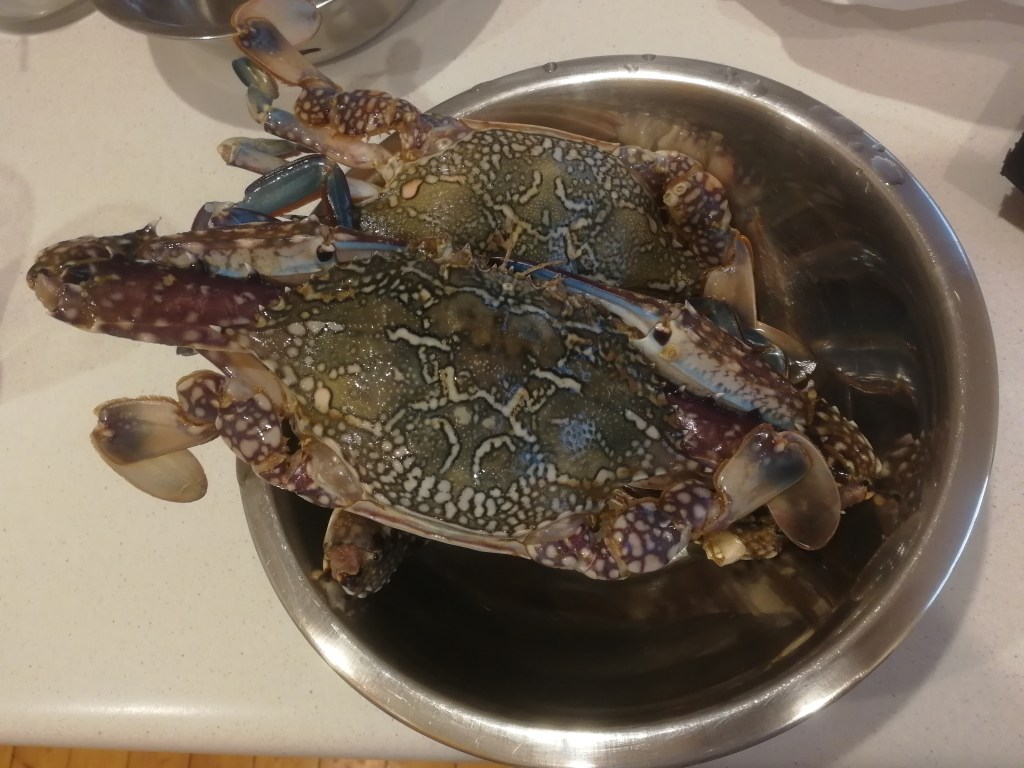
This is a great dish and I decided to write about it after making it for New Year’s Eve and being enthusiastic about the outcome. I used this video recipe as a starting point and modified it slightly.
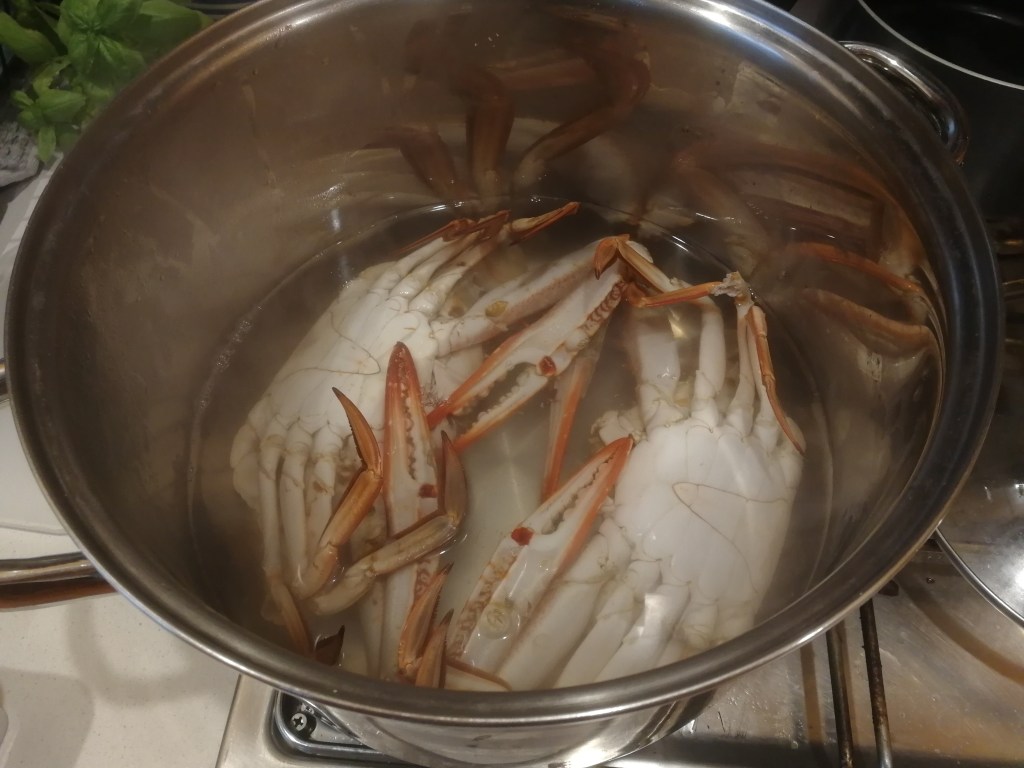
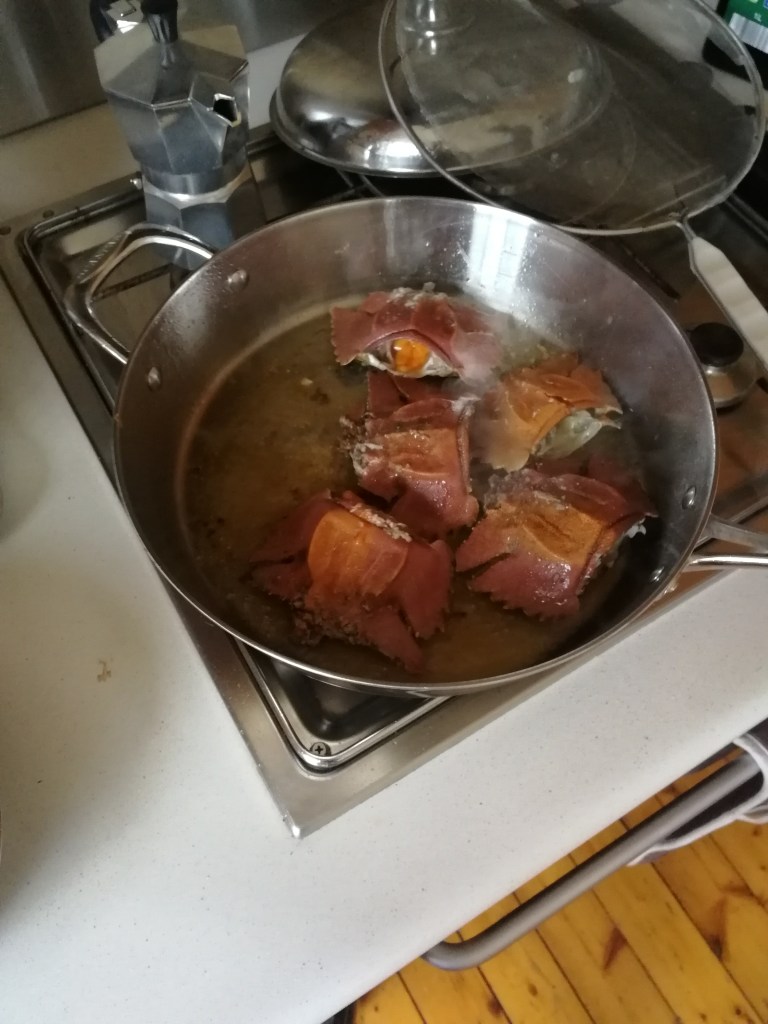
- Boil the crabs (or crab) for 3 minutes circa in a pot with enough salted water to use later to cook your pasta. The idea is to start cooking the crabs while enriching the flavour of the water in the process. For bigger crabs, cook for a couple of minutes extra.
- In the meantime, make a soffritto by lightly-frying a garlic clove, a chilli (it’s not a spicy dish, this is just for extra flavour) and a parsley stem (no leaves because they burn quickly). If you leave them cooking on minimal heat you can proceed with the next steps without turning the fire off.
- Remove the crabs from the water and clean them as shown here. Mine is a lazy man’s recipe, so I simply remove the tail of the crab and its gills, but I do not extract any meat from the crab. It’s boring, it takes time and appropriate tools and getting dirty is integral to the crab-eating experience.
- IMPORTANT: When you crack the torso open, it will release a sizeable amount of juicy water. Do not let it go to waste. Collect the water using a bowl during the procedure.
- Put the top part of the torsos — the meatless shells — and the residual water detailed at point (4) into the boiling pasta water. To confirm, this is the water you have cooked the crab in in step (1). You are hence left with the legs and the meaty part of the torso — which you have split in two as shown here.
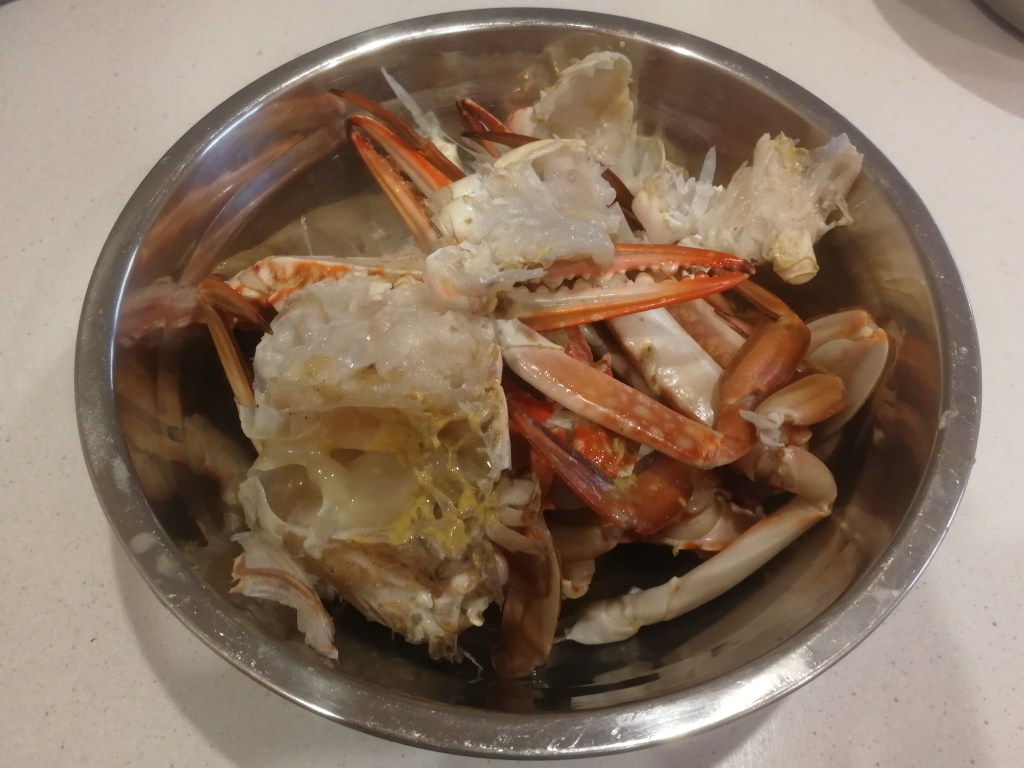
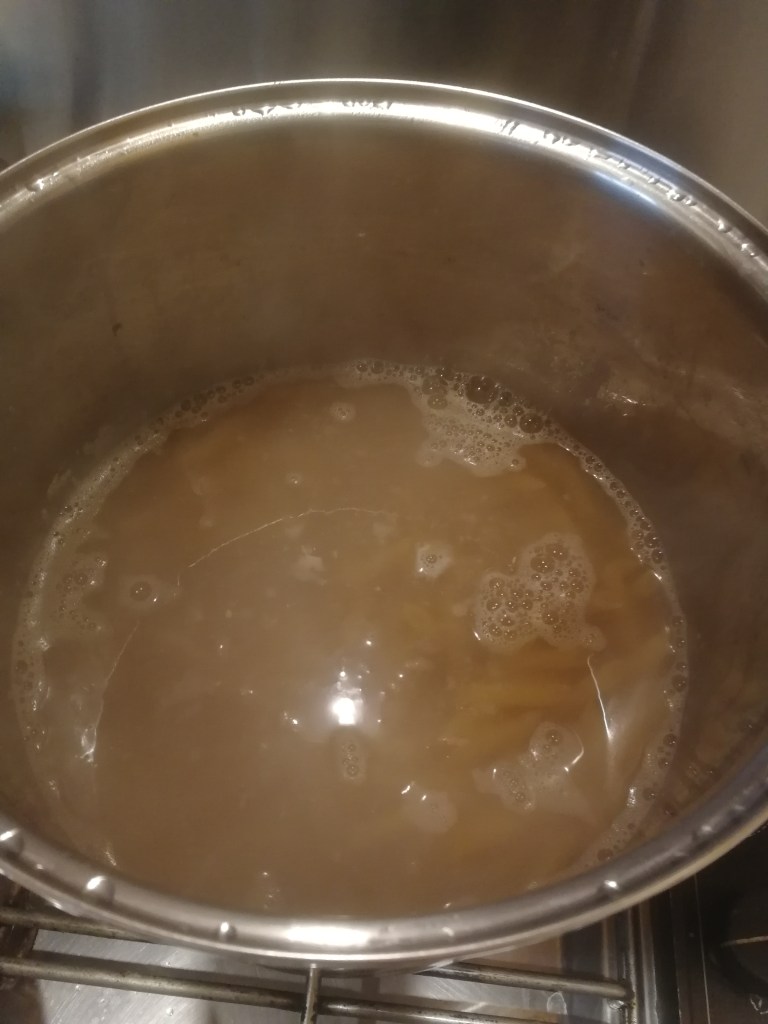
- Put the pasta in the boiling pasta water. The juices of the crabs should have made this water dark and flavoursome. You can remove the crab shells and use them to embellish the plate in the dishing phase.
- While the pasta starts cooking, throw the legs and torsos in the soffritto, together with some plum tomatoes (the sweet kind). Add half a ladle of tasty pasta water too, allowing you to cook on a high flame without burning the soffritto.
- After about 5 minutes, add some brandy (or cognac) to the pan and flambé, as shown here or by lighting it using a match.
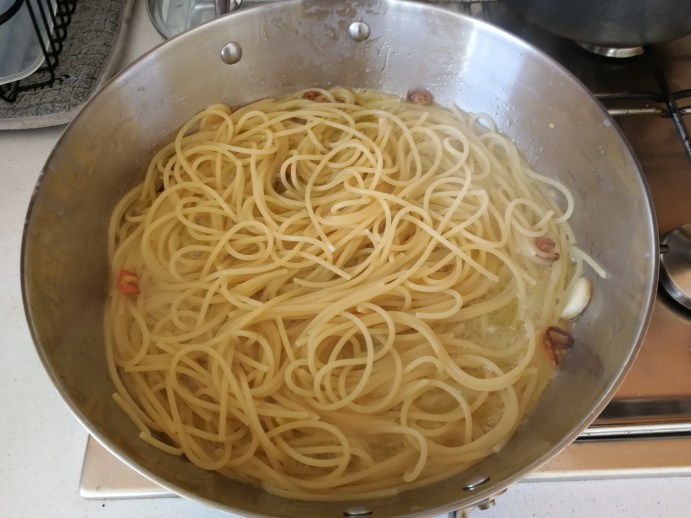
- It is important that you finish cooking the pasta in the sauce pan. This procedure is called risotto-ing the pasta. The pasta still needs to cook for, say, 3 minutes. You place it in the sauce pan and add ladles of pasta water until the pasta is ready (to check when ready, simply keep tasting it). Watch this helpful video if you are confused. Keep either flipping the pasta or mixing it vigorously with a wooden spoon throughout the process. The idea is to trap air into the sauce so that it might thicken.
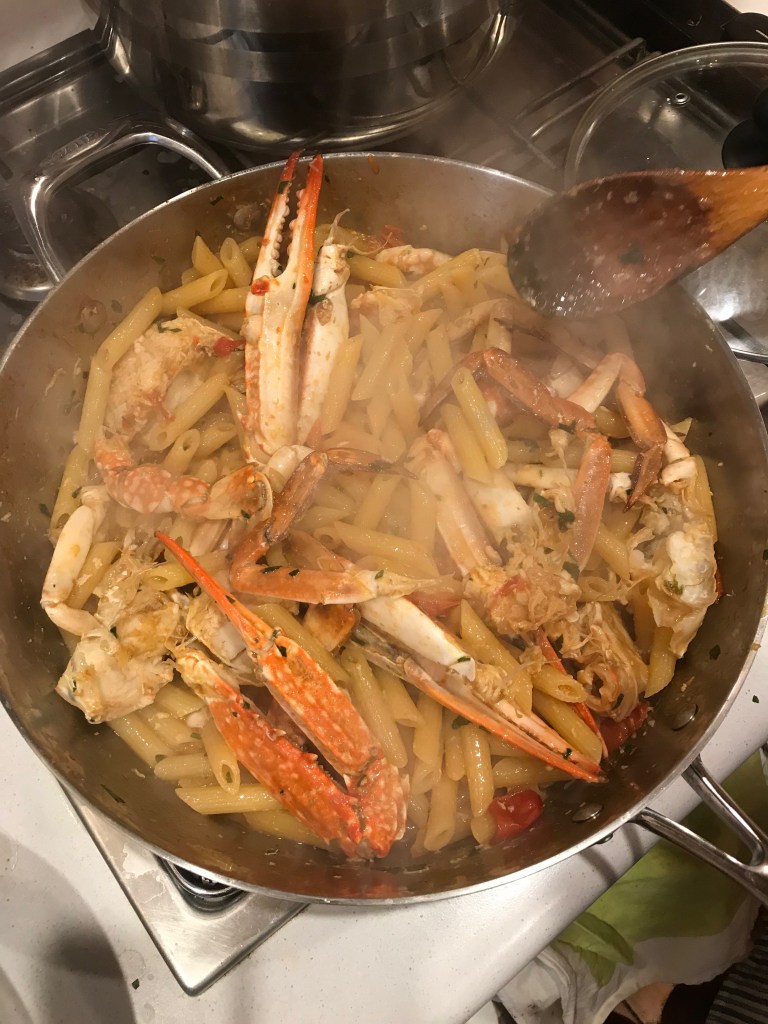
- While cooking, add some tomato paste. It will enrich the flavour while not making the sauce too tomato-y. During the last minute of cooking, add some chopped parsley too. Keep a pinch of parsley on the side to add directly on the pasta when plating the dish.
Congratulations, you have successfully prepared a dish that will make you famous among your friends!
 Italo's Kitchen